

แสดงบทความที่มีป้ายกำกับ travel china แสดงบทความทั้งหมด

The Temple of Heaven in China


The Temple of Heaven is situated in the southern part of Beijing. It was first built in 1420 in the Ming Dynasty during the time when the Forbidden City ans some other important imperial structures were constructed. It covers an area of 273 hectares, which is 3 times larger than th Forbidden City. The Temple of Heaven is not only the largest group of temple building in China, but also the largest heaven-worshipping architecture in the world.
The Temple of Heaven was the place where the emperors of the Ming and Qing dynasties worshipped heaven and prayed for good harvests. The emperors visited the temple three times a year: on the 8th day of the first lunar month to pray for a good harvest; during the Summer Solstice to pray for rain; and during Winter Solstice to give thanks for a good harvest. During each ceremony, the emperors worshipped heaven and prayed for a good harvest. In addition, the emperors also worshipped their ancestors and other natural phenomena such as the Cloud God, Rain God and Wind God. In imperial days, the Chinese people believed that the sky was incircular shope and the earth was square. On the basis of this tranditional concept, the circle was widely adopted in the design of the temple's main building. It is in accord with people's imagination of heaven.
The Temple is divided by two enclosed walls into inner part and outer part. The main buildings of the Temple lie at the south and north ends of the middle axis line of the inner part. The most magnificent buildings are The Circular Mound Altar (Yuanqiutan), Imperial Vault of Heaven (Huangqiongyu) and Hall of Prayer for Good Harvest (Qiniandian) from south to north. Also, there are some additional buildings like Three Echo Stones and Echo Wall.Almost all of the buildings are connected by a wide bridge called Vermilion Steps Bridge (Danbiqiao) or called Sacred Way.

The Circular Altar has three layered terraces with white marble. During the Ming and Qing Dynasties (1368 A.D. - 1911 A.D.), the emperors would offer sacrifice to Heaven on the day of the Winter Solstice every year. This ceremony was to thank Heaven and hope everything would be good in the future. The Hall of Prayer for Good Harvest is a big palace with round roof and three layers of eaves. Inside the Hall are 28 huge posts. The four posts along the inner circle represent four seasons-spring, summer, autumn and winter; the 12 posts along the middle circle represent the 12 months; and 12 posts along the outer circle represent 12 Shichen (Shichen is a means of counting time in ancient China. One Shichen in the past equaled two hours and a whole day was divided into 12 Shichens). The roof is covered with black, yellow and green colored glaze representing the heavens, the earth and everything on earth.
The Hall has a base named Altar for Grain Prayers which is made of three layers of white marble and has a height of six meters. Another important building in Temple of Heaven is Imperial Vault of Heaven. If you look at it from far away, you will find that the Vault is like a blue umbrella with gold head. The structure of it is like that of Hall of Prayer for Good Harvest, but smaller in size. The structure was made of bricks and timber. The Vault was used to place memorial tablets of Gods. White marble railings surround the vault.
The Vermilion Steps Bridge connects the Hall of Prayer for Good Harvest and the Imperial Vault of Heaven. The south end of the Bridge is lower than its north end. The emperors in the past believed that they could go to heaven through this Bridge, which is why this bridge is also called Sacred Way. A Yu Route and a Wang Route are on two sides of the Sacred Way. The former one is only for the emperors to walk on and the later one is for the princes and the high officials to pass.
Three Echo Stones is outside of the gate of the Imperial Vault of Heaven. If you speak facing the Vault while standing on the first stone, you will hear one echo; standing on the second and then the third stone, you will hear two and three echoes respectively.
Another interesting and famous place for you to visit is called Echo Wall owning special feature. The wall encloses the Imperial Vault of Heaven. Its perimeter is 193 meters. If you and your friend stand at the east and the west roots of the wall respectively and you whisper a word, then your friend will hear clearly what you say. Isn't it interesting?The phenomenon utilizes the theory of sound wave.Besides carefully designed buildings, there are also some other scenes that you can enjoy like Nine-Dragon Cypress. It got its name from branches which look like nine dragons wind with each other. It was said that the cypress was planted more than 500 years ago. Really, a grandfather tree!

Temple Of HeavenGates To The Temple of HeavenTemple of Heaven, BeijingSpiritualBejing - Temple of Heaven

Exploring the Forbidden City

The Forbidden City is located in the Tiananmen Square; heart of Beijing and is the most impressive and elegant palatial complex in the world. It consists of a number of buildings which together house 9,999 1/2 rooms.

The Forbidden City was built nearly 500 years ago. It was aptly named as no commoner was allowed near it and the emperor who ruled within the strong walls of this huge place rarely ventured out. The construction of this grand structure began in 1407 and by 1420 it was complete by over a million workers and thousands of artisans. The complex served as a residence to 24 Qing and Ming Dynasty rulers; with the last Emperor being evicted out in 1924.

The Forbidden City was a fantasy in those days and even today is an enigma. Even today the walls seem to whisper the conspiracies they had seen, the secrets they had heard and the passion they had witnessed.

The Chinese left no stone unturned in beautifying the place. The rectangular structure has a gate on each side. White marble was used in its construction and the walls were made of terra cotta, as yellow was the color of royalty, yellow glazed tiles were used for roofs. Even the decorations were painted in yellow. The outer brick red wall is extremely strong and angular (it is broad at the base and becomes narrow at the top) making it practically impossible to climb. The palace was further protected by a moat six feet deep. The complex had two sections; the Southern Section which was the outer court from where the Emperor conducted the affairs of the country and the Northern Section where he lived with his family.

Though the whole place is quite amazing but some sections you should not miss are the Hall of Supreme Harmony, the Dragon Throne and the Treasure Gallery. The Hall is grandeur and splendor personified and all the important ceremonies such as the crowning of the new Emperor, royal weddings, royal birthdays and festivals were celebrated here. The Emperor also received dignitaries in this Hall. The Hall was quite tall and symbolized royal supremacy. No building was allowed to be higher than the Hall. The Treasure Gallery comprises of three halls and showcases the items of daily use in the Royal Household.

The Forbidden City is a prime example of Chinese architecture. It was included in the list of UNESCO's World Heritage Cultural Site in 1987 and is now the Palace Museum. Every year it attracts thousands of tourists.

Reed Flute Cave Guilin, China,Beautiful caves in Guilin

The Reed Flute Cave (Chinese: 芦笛岩; pinyin: Lúdí Yán) is a landmark and tourist attraction in Guilin, Guangxi, China. It is a natural limestone cave with multicolored lighting and has been one of Guilin’s most interesting attractions for over 1200 years. It is over 180 million years old. The cave got its name from the type of reed growing outside, which can be made into melodious flutes. Reed Flute Cave is filled with a large number of stalactites, stalagmites and rock formations in weird and wonderful shapes. Inside, there are more than 70 inscriptions written in ink, which can be dated back as far as 792 AD in the Tang Dynasty. These aged inscriptions tell us that it has been an attraction in Guilin since ancient times.[not in citation given] It was rediscovered in the 1940s by a group of refugees and has since received many VIPs.


Reed Flute Cave
What make Reed Flute Cave so marvelous are the stalactites, stalagmites, and columns that can be found inside the cave. While walking through the cave, visitors feel like they are being transported to different environments. Some sections seem like a forest of crystal trees, while others seem like underground mountain ranges and even cities.

The most beautiful hotel in the world,Ranking 7 Waterworld Hotel in China


Atkin’s Architecture Group recently won the first prize award for an international design competition with this stunning entry. Set in a 330 feet deep quarry and includes underwater public areas and guestrooms. The 400 bed resort hotel is uniquely constructed within the natural elements of the quarry. Underwater public areas and guest rooms add to the uniqueness, but the resort also boasts cafes, restaurants and sporting facilities.
This spectacular and intriguing looking hotel is set in a partly water filled quarry, located in the Songijang satellitetown of Shanghai. Bristol-based Martin Jochman, who led the design team, says, “We drew our inspiration from the quarry setting itself, adopting the image of a green hill cascading down the natural rock face as a series of terraced landscaped hanging gardens. In the centre, we have created a transparent glass ‘waterfall’ from a central vertical circulation atrium connecting the quarry base with the ground level. This replicates the natural waterfalls on the existing quarry face.”
The firm has earlier won a contract to develop the master planning and detail design for part of Songijang which was an existing town that was expanded to serve as a satellite town to Shanghai. The new Songijang is a university town and a popular weekend and holiday destination for Shanghai residents and other visitors, linked to Shanghai by metro.


http://lilomag.com/2010/06/26/waterworld-hotel-china/

Tourist Attraction Great Wall Of China

When you said that you have been to China as a sight seeing tourist, invariably people will ask you whether you have you visited The Great Wall Of China.

Why are people so obsessed with this ancient fortress monument? Well, as someone who have taken a sightseeing tour of the Great Wall, I can sum it up in one word. The Great Wall of China is awesome!

I was awestruck by the spectacular scenery and its courageous history. This gigantic monument is considered by many people as one of the wonders of the world. Any tourist traveling to China must definitely make visit the Chinese tourist attraction.

The Great Wall of China is over 2,000 years old and it is a monument rich in history. It was first conceived and constructed by Qin Shi Huang or also known as Shi Huang Ti, who was the first emperor of China. The wall is called "Wan-Li Qang-Qeng" in Chinese when translated literally means 10,000 li long wall which is equivalent to about 5,000 km or 2,272 miles long.

The Great Wall Of China was constructed as a military fortification against intrusion by invading normadic ancient tribes. The Chinese people at that time called these tribes barbarians since the Chinese royalties were living in sprawling palaces and these tribes were living in tents.

After the emperor Qin unified China in 214 BC, he ordered the construction of the wall. It took more than a decade to construct and the great wall stretched from Lintao in the eastern part of Gansu province in the west to Liaodong in Jilin province in the east. The wall not only served as a defensive bastien against invaders in the northern parts of China, it is also a symbol of power for the proud emperor.

From the Qin Dynasty onwards, Xiongnu (translated from Chinese as fierce anger), which was an ancient tribe that roamed Northern China, frequently make incursions and plunder towns and villages along the northern border.

During the Han Dynasty in and around 121 BC, emperor Han Wu Di, ordered three military expeditions to repel and quash the Xiongnu tribe. The military expeditions successfully pushed the Xiongnu tribe into the far north of the Gobi desert, which is a tundra.

In order to secure the safety of the Hexi Corridor (now Gansu province), the emperor also ordered the construction of the extension of the Great Wall westward into the Hexi Corridor and Xinjiang region. The ruins of the tower beacons and debris of the Han Wall are still preserved in Dunhuang, Yumen and Yangguan districts and provinces. There is also a report that more ruins of the Han Wall have recently been discovered near Lopnur in Xinjiang province.

The present day Great Wall Of China in Beijing is mainly the remains from the Ming Dynasty era. During this golden era of Chinese culture, bricks and granite were used when the workers laid the foundation of the wall. Sophisticated designs and passes were also constructed in places of strategic military importance.

To further empower the military's control of China's northern frontiers, the Ming Dynasty government divided the Great Wall into nine zones and placed each zone under the command and control of a Zhen, which is a military garrison headquarter.

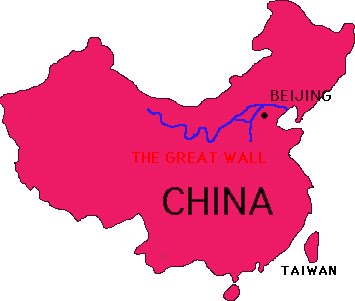
The Ming Wall begins at Yalujiang River in what is now in Heilongjiang province, through Liaoning, Hebei, Inner Mongolia, Shanxi, Shaanxi, Ningxia provinces, to Gansu reaching a length of about 12,700 li (about 5,200 km or 2,400 miles).

Although The Great Wall served succeeding dynasties very well for a few hundred years as a defence bastion against invading forces, the invaders from the north in the end were able to advance and conquer China in succeeding dynasties such as Mongolians (Yuan Dynasty, 1271-1368) and the Manchus (Qing Dynasty, 1644-1911) did.

With such splendidly rich history and panoramic views, is it any wonder why the Great Wall Of China is one of the most visited tourist attraction in the world?

Read more: http://www.articlesbase.com/travel-articles/tourist-attraction-great-wall-of-china-240109.html#ixzz1SaDlsPFs
Under Creative Commons License: Attribution No Derivatives
The Great Wall of China


Great Wall of China Tourist Attraction

When you said that you have been to China as a sight seeing tourist, invariably people will ask you whether you have you visited The Great Wall Of China.

Why are people so obsessed with this ancient fortress monument? Well, as someone who have taken a sightseeing tour of the Great Wall, I can sum it up in one word. The Great Wall of China is awesome!

I was awestruck by the spectacular scenery and its courageous history. This gigantic monument is considered by many people as one of the wonders of the world. Any tourist traveling to China must definitely make visit the Chinese tourist attraction.

The Great Wall of China is over 2,000 years old and it is a monument rich in history. It was first conceived and constructed by Qin Shi Huang or also known as Shi Huang Ti, who was the first emperor of China. The wall is called "Wan-Li Qang-Qeng" in Chinese when translated literally means 10,000 li long wall which is equivalent to about 5,000 km or 2,272 miles long.

The Great Wall Of China was constructed as a military fortification against intrusion by invading normadic ancient tribes. The Chinese people at that time called these tribes barbarians since the Chinese royalties were living in sprawling palaces and these tribes were living in tents.

After the emperor Qin unified China in 214 BC, he ordered the construction of the wall. It took more than a decade to construct and the great wall stretched from Lintao in the eastern part of Gansu province in the west to Liaodong in Jilin province in the east. The wall not only served as a defensive bastien against invaders in the northern parts of China, it is also a symbol of power for the proud emperor.

From the Qin Dynasty onwards, Xiongnu (translated from Chinese as fierce anger), which was an ancient tribe that roamed Northern China, frequently make incursions and plunder towns and villages along the northern border.

During the Han Dynasty in and around 121 BC, emperor Han Wu Di, ordered three military expeditions to repel and quash the Xiongnu tribe. The military expeditions successfully pushed the Xiongnu tribe into the far north of the Gobi desert, which is a tundra.

In order to secure the safety of the Hexi Corridor (now Gansu province), the emperor also ordered the construction of the extension of the Great Wall westward into the Hexi Corridor and Xinjiang region. The ruins of the tower beacons and debris of the Han Wall are still preserved in Dunhuang, Yumen and Yangguan districts and provinces. There is also a report that more ruins of the Han Wall have recently been discovered near Lopnur in Xinjiang province.

The present day Great Wall Of China in Beijing is mainly the remains from the Ming Dynasty era. During this golden era of Chinese culture, bricks and granite were used when the workers laid the foundation of the wall. Sophisticated designs and passes were also constructed in places of strategic military importance.

To further empower the military's control of China's northern frontiers, the Ming Dynasty government divided the Great Wall into nine zones and placed each zone under the command and control of a Zhen, which is a military garrison headquarter.

The Ming Wall begins at Yalujiang River in what is now in Heilongjiang province, through Liaoning, Hebei, Inner Mongolia, Shanxi, Shaanxi, Ningxia provinces, to Gansu reaching a length of about 12,700 li (about 5,200 km or 2,400 miles).

Although The Great Wall served succeeding dynasties very well for a few hundred years as a defence bastion against invading forces, the invaders from the north in the end were able to advance and conquer China in succeeding dynasties such as Mongolians (Yuan Dynasty, 1271-1368) and the Manchus (Qing Dynasty, 1644-1911) did.

With such splendidly rich history and panoramic views, is it any wonder why the Great Wall Of China is one of the most visited tourist attraction in the world?


The Great Wall of China was built as a fortification against invading Mongol tribes. One of the largest man-made structure, it is said to be discernable from space. It certainly is a big tourist attraction.

In reality the Great Wall is not a continuous wall but a collection of shorter walls going up and down the crest of hills bordering southern Mongolian plains. Overall the wall runs about 2400 km. The first set of walls was made of earth and stones in wood frames during the Qin Dynasty in 221-206 BCE.

Western world found the Great Wall a telling human achievement and growing contacts with China from 17th century onwards turned it into a fascinating tourism spot. With tourism came restoration and
rebuilding that continues on and off. In 1987 the Great Wall of China was made a World Heritage Site.

Visitors book hotels in Beijing to tour the Great Wall. Foreign tourists are often offered customized tour packages convenient for staying and touring the Great Wall. Many international and local 5-star hotels offer comfortable lodging with extensive amenities and entertainment facilities.

The Great Wall has become one of the top tourist spots in China that regularly draws in many visitors. Finding a place to stay during your visit should not be a problem as there are many fine hotel accommodations around the Great Wall of China.

The Great Wall of China has never failed to impress many tourists and guests with its grandeur and historical value. The Great wall covers 5,500 miles from east to west of China and has been a great part of China’s history for more than 2,000 years.

Today, the Great Wall of China has become more than just China’s historical witness, it is now among the most amazing structures man has every created.

Sheraton Hotel – This hotel is a world renowned hotel with top facilities and huge accommodation capacity. It is located at 10 North Dong San Huan Road, Chaoyang District Beijing, China.

Sheraton Hotel has 827 well-appointed guest rooms, 98 of which are suites. Standard guest rooms are provided with air-conditioning units, telephones, Cable televisions, high speed Internet, full kitchen, a mini bar, deluxe bath amenities, voicemail and free daily news paper. The hotel also offers accessible rooms for guests with disabilities.

Commune by the Great Wall - Commune by the Great Wall is a modern designed hotel. It is located at Badaling Highway, Juyongguan, China. It is a statement of the present and past beauties of the region, having both a modern hotel and amazing view of the Great Wall of China. The hotel’s ease of access on Badaling Highway is the main reason why most guests prefer this hotel over other hotels.

In-pair with the over all modernized Commune ambiance, beautiful rooms loaded with modern amenities are offered in this place. Basic room package has air-conditioning units, telephones, hairdryers, cable satellite/TVs and a mini bar. There is more to this Great Wall hotel, they also have baby sitting services, a fitness center, laundry facilities, and parking spaces.

Red Capital Ranch - Red Capital Ranch is an amazing vintage hotel beside the Great Wall of China. It is conveniently located at NO.28 Xiaguandi Village, Yanxi Township Huairou District. The location was once the hunting grounds of the Qing emperors.

Red Capital Ranch is composed of 10 stone cottages, a Tibetan spa, and a conventional teahouse. Every room is furnished with many artifacts from China and Tibet. Extra beds are provided for the children but the place is mostly ideal for a couple’s romantic get away. Pets are welcome – the ranch has its own local dogs.
Wi-Fi Internet access is made available at the lobby. Check-in time is at 2:00 PM and Check-out time is usually in the middle of the day.

Published At: Isnare.com Free Articles Directory - http://www.isnare.com/
Permanent Link: http://www.isnare.com/?aid=295142&ca=Travel