
แสดงบทความที่มีป้ายกำกับ Historical attractions แสดงบทความทั้งหมด

Travel Petra in Jordan


Petra is additionally one in every of seven wonders of the traditional world, Petra is behind dense rocky mountains, this place boasts of distinctive scenes that makes it the foremost magnificent and spectacular ancient web site today. it's a proven fact that nothing in world resembles it. This rose-red rock-carved town of Petra is jam-packed with mystifying charm the spectators here admire the hanging fantastic thing about the place.

Petra is that the most acknowledge and delightful spot in Jordan it's situated around one hundred thirty five km north of Aqaba and 264 km south of Amman. This place came into existence owing to the legacy of the Nabataeans, they were primarily industrious Arab those who came and settled in southern Jordan some 2000 years ago. The place is well-liked due to its distinguished culture, gigantic design and owing to the complicated of water channels and dams. Petra is one in every of the Seven Wonders of the globe and is additionally included within the UNESCO world heritage web site. The place with its hanging options attracts several guests from nook and corner of the world.

This magnificent place includes a kilometer long, gloom and funky chasm; there's an existence of long slim gorge that has steep rising sides that provides the dramatic distinction with the magic. This gorge suddenly opens into one in every of the natural sq. that is dominated the foremost acknowledge monument of Petra, The Treasury (El-Khazneh). The Treasury’s intricately carved facade blazes within the glittering sun.

This ancient town slowly reveal one monument when the opposite until an extended distance for kilometers. solely the scale of town and therefore the strikingly carved facades is astounding and reflects the trade and creativity of the Nabataeans. The Nabataeans created Petra their capital for long-standing.

Visiting to Petra is often superb, and memorable. This place flourished for over four hundred years it had been all throughout the time of Rome and Christ later it had been captured by the Roman legions of Trajan in 106 AD.

There are around 800 individual monuments in Petra basin that carries with it tombs, buildings, baths, temples, funerary halls, arched gateways, and colonnaded streets. These were all carved by the consultants from the kaleidoscopic sandstone. the simplest time to visualize the Petra sights are throughout the first morning and late within the afternoon, when the rays of the sun warms stones. when being lost in sixteenth century Petra was presently discovered within the year 1812.

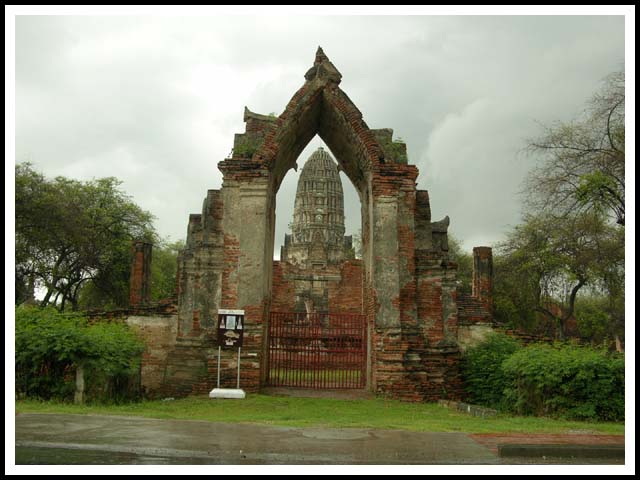
Ayutthaya Historical Park

Ayutthaya Historical Park
The Ayutthaya historical park covers the ruins of the old city of Ayutthaya, Thailand, which was founded by King Ramathibodi I in 1350 and was the capital of the country until its destruction by the Burmese army in 1767.
In 1969 the Fine Arts Department began with renovations of the ruins, which became more serious after it was declared a historical park in 1976. The park was declared a UNESCO World heritage site in 1991. According to "Tourism Asia," thirty-three monarchs including King Rama IV governed from Ayutthaya.


Wat Chaiwatthanaram

Wat Chaiwatthanaram (Thai: วัดไชยวัฒนาราม) is a Buddhist temple in the city of Ayutthaya, Thailand, on the west bank of the Chao Phraya River, outside Ayutthaya island. It is one of Ayutthaya's most well known temples and a major tourist attraction.
Wat Chaiwatthanaram lies on the west bank of Chao Phraya River, south west of the old city of Ayyuthaya. It is a large compound and is a UNESCO World Heritage Site. It can be reached by road or by boat.
The temple was constructed in 1630 by the king Prasat Thong as the first temple of his reign, as a memorial of his mother's resident in that area. The temple's name literally means the Temple of long reign and glorious era. It was designed in Khmer style which was popular in that time.
It has a central 35 meter high prang in Khmer style (Thai: พระปรางด์ประธาน) with four smaller prangs. The whole construction stands on a rectangular platform. About halfway up there are hidden entrances, to which steep stairs lead.
The central platform is surrounded by eight chedi-shaped chapels (Thai: เมรุทิศ เมรุราย - Meru Thit Meru Rai), which are connected by a rectangular cross-shaped passage (Phra Rabieng). The passage had numerous side entries and was originally roofed and open inwards, but today only the foundations of the pillars and the outside wall still stand. Along the wall, there were 120 sitting Buddha statues, probably painted in black and gold.
The eight chedi-like chapels are formed in a unique way. They had paintings on the interior walls, the exterior ones decorated by 12 reliefs depicting scenes from the life of Buddha (Jataka), which must be "read" clockwise. Just fragments of the paintings and the reliefs survived. In each of the rectangular chedis were two sitting Buddha statues and in each of the four middle chedis was one big sitting Buddha statue, also lacquered in black and gold. The ceiling over those statues was of wood with golden stars on black lacquer.
Outside of the passages on the east, close to the river was the temple's ordination hall (Phra Ubosot). North and south from the Ubusot stood two chedis with "12 indented corners" (Thai: เจดีย์อมุมสิบสอง), in which the ashes of the king's mother were laid.
After the total destruction of the old capital (Thai: กรุงเก่า - Krung Kao) by the Burmese in 1767, from which Wat Chai Watthanaram was not spared, the temple was deserted. Theft, sale of bricks from the ruins and the beheading of the Buddha statues were common. Only in 1987 did the Thai Department of Fine Arts start restoring the site. In 1992 it was opened to the public.
The Wat Chaiwatthanaram structure reflects the Buddhist world view, as it is described already in the Traiphum Phra Ruang, the "three worlds of the King Ruang", of the 14th century: The big "Prang Prathan" that stands in the centre symbolizes the mountain Meru (Thai: เขาพระสุเมรุ - Khao Phra Sumen), which consists the central axis of the traditional world (Kamaphum - กามภูมิ). Around it lie the four continents (the four small Prangs) that swim in the four directions in the world sea (นทีสีทันดร). On one of the continents, the Chomphutawip (ชมพูทวีป), the humans live. The rectangular passage is the outer border of the world, the "Iron Mountains" (กำแพงจักรวาล).